Sports are a fantastic way for kids and adults in Layton, Utah, to stay active, build teamwork, and have fun. However, high-impact athletic activities also carry an inherent risk of facial and mouth injuries. Taking proactive steps to protect your teeth can mean the difference between celebrating a big win and taking an unexpected trip to the dentist. Protecting your smile starts with preparation, quality equipment, and knowing how to handle potential risks before you hit the field or court.
At Hillfield Pediatric & Family Dentistry in Layton, Utah, we want to help your entire family stay safe while enjoying their favorite sports. To safeguard your smile, schedule a consultation with our experienced family dentist office today to discuss custom mouthguards and preventive oral care.
Before heading out to your next game or practice, review these essential safety strategies:
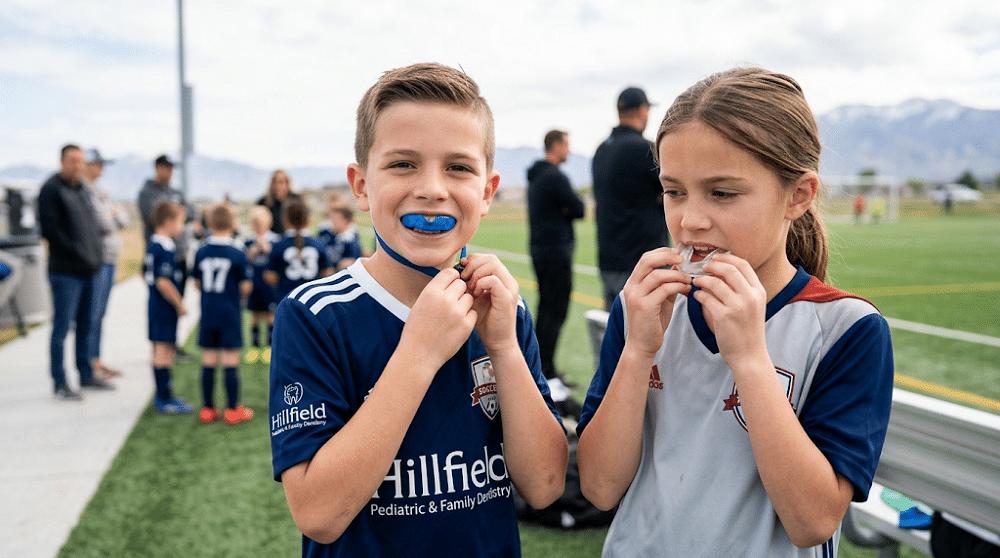
When it comes to preventing dental trauma, a high-quality mouthguard is your first line of defense. A mouthguard cushions sudden impacts to the lower face, distributing the force evenly and reducing the risk of broken teeth or soft tissue lacerations.
While off-the-shelf "boil-and-bite" options are widely available at sporting goods stores, custom-fitted mouthguards crafted by a dental professional offer significantly better protection and comfort. A custom guard fits the unique contours of your mouth, making it easier to speak, breathe, and stay focused on the game. Because they are comfortable, young athletes are far more likely to wear them consistently during practices and games.
Understanding the types of oral injuries that can occur during athletic events helps parents and athletes recognize the importance of preventive measures.
| Injury Type | Primary Cause | Immediate First Aid Action |
| Chipped or Cracked Teeth | Direct impact from balls, sticks, or elbow contact | Rinse mouth with warm water; save any broken tooth fragments. |
| Fractured Roots | Severe blunt force to the jaw or face | Apply a cold compress to reduce swelling and visit a dentist immediately. |
| Knocked-Out Tooth (Avulsion) | High-velocity collisions or direct blows to the mouth | Hold the tooth by the crown (not root), keep it moist in milk, and seek care within 60 minutes. |
| Soft Tissue Lacerations | Accidental bites or sharp contact against cheeks, lips, or tongue | Apply gentle pressure with clean gauze to stop bleeding. |
Whether playing competitive soccer, basketball, or football, taking precautions can help athletes prevent dental emergencies and avoid painful, costly restorative treatments down the road.
Mouthguards are critical, but they are only one part of a comprehensive safety strategy. High-impact sports often require extra layers of protection to shield the jaw, facial bones, and head from severe trauma.
Combining helmets and face shields with custom mouthguards provides total protection for young athletes across Davis County.
Protective equipment requires ongoing care to remain effective and sanitary. Bacteria and fungi can rapidly multiply on unwashed mouthguards, leading to oral infections or unpleasant odors. Some tips:
Mouthguards are recommended for all contact sports like football, hockey, and martial arts, as well as non-contact sports with collision risks, such as basketball, gymnastics, skateboarding, and mountain biking.
Children and teens should replace their mouthguards every sports season or every six months. Growing jaws and changing teeth can alter how the mouthguard fits, reducing its effectiveness.
Yes! Special mouthguards are designed specifically for orthodontic patients. They protect both the teeth and the soft tissues of the mouth from being injured by metal brackets and wires during an impact.
At Hillfield Pediatric & Family Dentistry, we’re here to help patients across a wide swath of needs, including those who play sports. Contact us today for tips on preventing dental emergencies during sports, or for any of our other family dentistry services around Layton!